
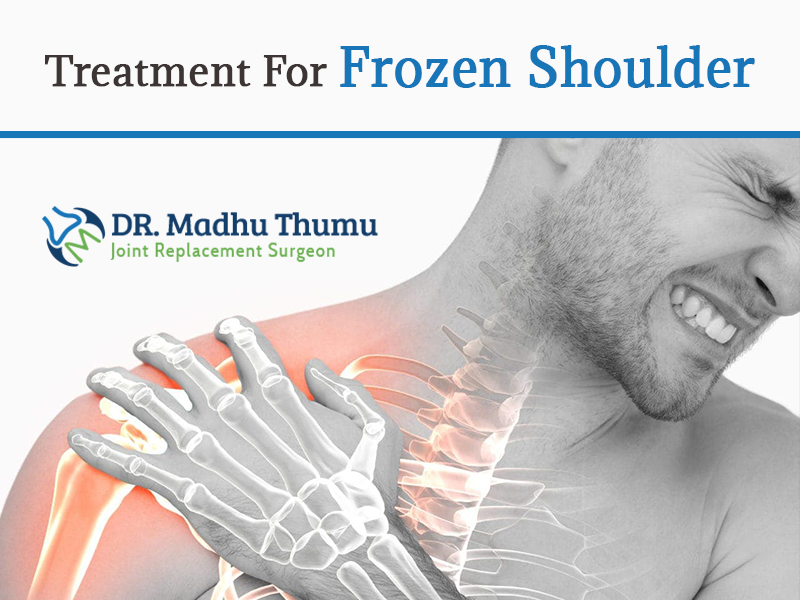
Sit back and think as to what kind of a life are you living. You have all the facilities you could have asked for: from food to fashion, everything gets delivered to you at your doorstep at the click of a button. That works for you because there’s so much that you have to get done. A fast-paced life isn’t easy to handle, and the biggest drawback it brings with it is risk to your health.
There are more cons than benefits of a fast paced life, it does not leave you with much time for self care and rest. That is when you end up with conditions like tennis elbow and frozen shoulder. The shoulder joint mechanism is such that when there is even a slight inflammation, it causes a lot of trouble in movement. In such cases, there is a lot of possibility of developing a frozen shoulder.
What is Frozen Shoulder?
The shoulder is a three-bone-mechanism that forms a ball-and-socket joint. These three bones are, your upper arm known as humerus, shoulder blade known as scapula, and your collarbone known ass clavicle. There’s a tissue called shoulder capsule, surrounding your shoulder joint that holds everything together which becomes so thick and tight that it hampers mobility.
Frozen shoulder is a condition that limits the range of motion of your shoulder. When the tissues in your shoulder joint become thicker and tighter, the development of scar tissues takes place over time. Leaving your shoulder joint without enough space to rotate properly. Common symptoms of frozen shoulder include swelling, Shoulder Pain, and stiffness.
Treatments for frozen Shoulder
- Fomentation: Compression for frozen shoulder.
- Medication: Over the counter medication for inflammation can help relieve the pain and decrease inflammation.
- Joint distension: this process involves injecting sterile water into your shoulder capsule to stretch it to increase mobility.
- Physical therapy: exercises and therapy for physical mobility by a physiotherapist can help relieve the strain and pain involved in frozen shoulder.
- Surgery: surgery is the last resort, when no other treatment course works, it is only in very rare cases that one would require a surgery, most frozen shoulders recover within a span of three years.
It is important to visit a proper Orthopaedic Surgeon to get the condition ruled out. Because if the condition continues it can lead to greater damage to the shoulder tissue, leading to a Shoulder surgery for treatment.